

Pet Obesity: Why Healthy Weight Matters for Dogs & Cats
We all love a chunky cat, a round little dog, a food-motivated pet who looks like they have never missed a snack.
But when it comes to our pets’ health, extra weight is not just cosmetic. It can affect comfort, movement, breathing, heat tolerance, long-term disease risk and quality of life.
At Ready Vet Go, we often talk about urgent and emergency care. But everyday wellness matters too. Helping pets maintain a healthy body weight is one of the most important things we can do to support more comfortable, active and longer lives. Tackling this problem together with your general practice vet means your pet will be guided smoothly through this process of weight management.
Pet obesity is common, but it is not harmless
Pet obesity is widely recognised as one of the most common nutritional health problems in dogs and cats. Veterinary nutrition guidelines recommend routine nutritional assessment, including body weight, Body Condition Score and Muscle Condition Score, as part of a pet’s overall health assessment.
Extra weight can place more strain on joints, affect mobility, worsen heat intolerance, increase anaesthetic risk, and contribute to poorer quality of life. In cats, excess weight is also strongly linked with health concerns such as diabetes and reduced mobility. In dogs, obesity has been associated with conditions including osteoarthritis, reduced insulin sensitivity, respiratory compromise and reduced lifespan.
This is not about judging pets or owners. It is about recognising that weight is a medical issue, and that early, supportive conversations can make a big difference.
Lean pets may live longer
One of the most commonly referenced studies on pet weight and lifespan is the long-term Purina Labrador Retriever study.
In this study, dogs in the lean-fed group were fed 25% less than their paired littermates in the control-fed group. The lean-fed dogs lived a median of 13 years, compared with 11.2 years in the control-fed group. That is a 1.8-year difference in median lifespan. The study also found that dietary restriction delayed the onset of signs of chronic disease.
It is important to phrase this carefully. This does not mean every overweight dog will lose exactly 1.8 years of life. It was a specific study in Labrador Retrievers. But it does strongly support a broader message: maintaining a lean, healthy body condition can have a meaningful impact on health and longevity.
A larger study looking at multiple dog breeds also found that overweight body condition was associated with a shorter lifespan across all 12 breeds studied, with the difference ranging from around 6 months to 2.5 years, depending on breed.
How do you know if your pet is overweight?
The number on the scale is useful, but it does not tell the whole story.
Veterinary teams often use a Body Condition Score, or BCS, to assess whether a pet is underweight, ideal, overweight or obese. This looks at things like:
Can you feel the ribs easily without pressing hard?
Can you see a waist from above?
Is there an abdominal tuck from the side?
Is there excess fat over the ribs, spine, tail base or abdomen?
The World Small Animal Veterinary Association provides body condition scoring tools for dogs and cats, and describes body condition scoring as a way to assess fat stores during veterinary nutritional assessment.
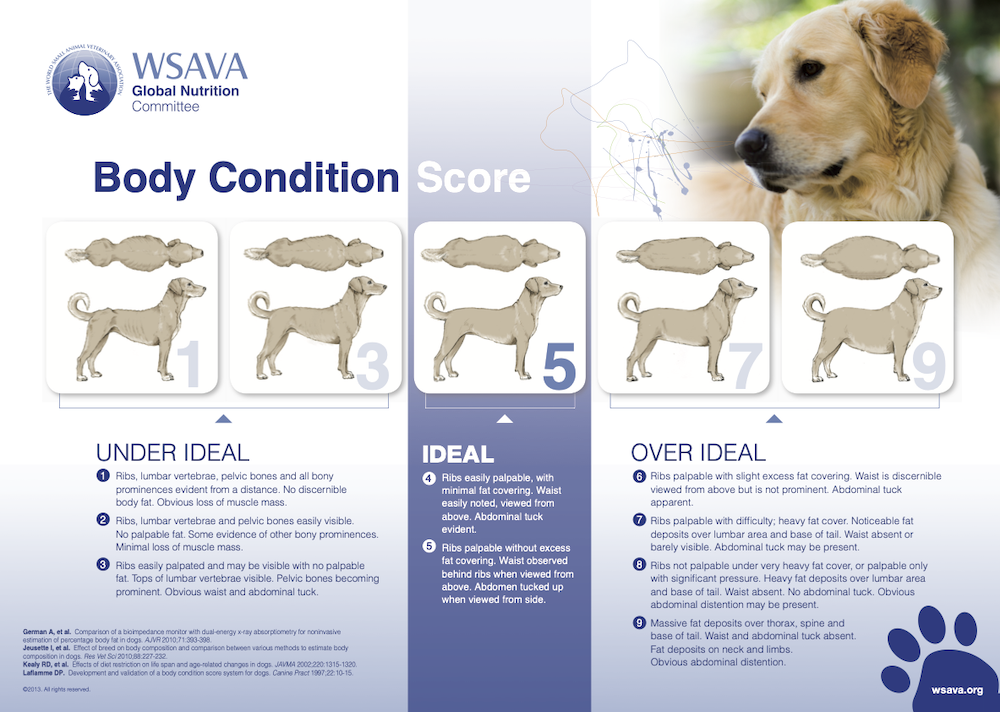

Muscle condition matters too. Some pets can carry excess fat while also losing muscle, especially senior pets or pets with underlying disease. That is why veterinary guidance is important.
Please do not crash diet your pet
When owners realise their pet is overweight, it can be tempting to suddenly cut food back dramatically. Please do not do this without veterinary advice.
Weight loss should be slow, steady and safe. Veterinary weight loss plans commonly aim for approximately 1 to 2% of body weight per week in dogs and around 0.5 to 2% per week in cats, depending on the patient, their health and how much weight they need to lose.
Cats need particular caution. If a cat eats too little, stops eating, or loses weight too rapidly, they can be at risk of serious health problems, including hepatic lipidosis, also known as fatty liver disease. This is one of the reasons cat weight loss should be closely monitored by a veterinary team.
Why veterinary guidance matters
A safe weight loss plan is not just “feed less.”
Your vet or vet nurse can help:
▪️ Assess your pet’s Body Condition Score and Muscle Condition Score
▪️ Check whether there are underlying medical issues contributing to weight gain
▪️ Estimate your pet’s ideal or target weight
▪️ Calculate a safe daily calorie target
▪️ Recommend an appropriate food
▪️ Make sure your pet is still getting complete and balanced nutrition
▪️ Plan safe exercise or enrichment
▪️ Monitor weight loss and adjust the plan over time
This is especially important for puppies, kittens, senior pets, pets with chronic disease, cats, and pets who need to lose a significant amount of weight.
Simple things owners can discuss with their vet
A good pet weight plan often starts with small, practical steps:
▪️ Measure food using kitchen scales rather than guessing with a cup.
▪️ Include treats in the daily calorie allowance.
▪️ Avoid sharing human food unless your vet says it is appropriate.
▪️ Use puzzle feeders, slow feeders or enrichment to make meals last longer.
▪️ Ask your vet whether your pet needs a weight management diet.
▪️ Book regular weigh-ins so the plan can be adjusted safely.
For many pets, treats are not the problem by themselves. The issue is often that treats, chews, scraps and “just a little extra” are not being counted as part of the full day’s intake.
A healthy weight is about comfort, not appearance
This is not about making pets look a certain way. It is about helping them breathe more comfortably, move more easily, cope better with heat, reduce joint strain and enjoy everyday life.
For some pets, even a small amount of weight loss can make a visible difference to their energy, comfort and willingness to move.
So yes, we can laugh at the belly.
We can love the floof.
But we can also take pet obesity seriously.
A healthy weight is one of the best gifts we can give our pets.
Need a starting point?
Ask your regular vet or vet nurse for:
▪️ A Body Condition Score
▪️ A current weight and target weight
▪️ A safe weight loss rate
▪️ A calorie plan
▪️ A recheck schedule
▪️ Advice on food, treats and exercise
And remember: slow, steady and veterinary-guided is the goal.

.jpg)
