

We often take it for granted — watching our pets breathe softly as they nap, snore lightly at our feet, or pant happily after a walk. But when their breathing changes — becomes faster, louder, or more strained — it can be worrying.
At Ready Vet Go, we regularly respond to pets struggling to breathe. These situations can develop quickly and may require oxygen support or hospital transfer. This guide explains how to recognise abnormal breathing, when it becomes an emergency, and what to do while help is on the way.
What Does Normal Breathing Look Like?
A healthy, relaxed dog or cat should breathe quietly through the nose, with a gentle rise and fall of the chest. You should barely hear it.
Breathing should not sound wheezy, shallow, or forced — and it should never involve continuous open-mouth breathing (unless your dog is panting briefly after exercise).
Normal breathing rates at rest:
- Dogs: 10–35 breaths per minute
- Cats: 15–30 breaths per minute
If your pet breathes faster than this while resting, or you notice unusual effort, noise, or open-mouth breathing, it’s time to pay closer attention.
Signs of Breathing Trouble in Pets
Dogs and cats show respiratory distress in different ways. Cats often hide or stay still, while dogs may appear restless or distressed.
Watch for signs such as:
- Fast breathing while resting
- Open-mouth breathing (never normal in cats)
- Heavy, noisy, or laboured breathing
- Chest effort or flaring nostrils
- Continuous panting in cool conditions
- Wheezing or crackling sounds
- Coughing or retching
- Collapse, pale or blue gums, or sudden lethargy
If your pet can’t lie comfortably, seems anxious, has an elevated Resting Respiratory Rate, or is struggling for air, treat it as a medical emergency.
Common Causes of Breathing Difficulty
Not all breathing changes mean the same thing. Some resolve on their own, while others can be life-threatening and need urgent care. A vet’s assessment is the only way to know the difference.
In Dogs
- Kennel cough: Dry, hacking cough that can make breathing hard
- Reverse sneezing: Often harmless but can sound dramatic
- Tracheal collapse: Common in small breeds, causing a honking sound
- Pneumonia: Leads to fast, shallow breathing and weakness
- Flat-faced breeds: May develop airway obstruction
- Heart disease: Causes fluid in the lungs and coughing
- Heatstroke: Rapid panting and overheating can escalate quickly
In Cats
- Feline asthma: Causes wheezing, coughing, and laboured breathing
- Respiratory infections: Common in kittens and shelter cats
- Open-mouth breathing after play: Often a red flag
- Fluid in lungs or chest: From heart failure or trauma
- Airway obstruction: Due to foreign objects or nasal blockage
If your cat is breathing rapidly, wheezing, or open-mouth breathing, contact our urgent care vets immediately. Cats rarely pant — and when they do, it’s almost always serious.
When It’s an Emergency
Not all breathing changes require hospitalisation, but many do. Call a vet straight away if your pet:
- Can’t lie down or rest comfortably
- Is breathing with an open mouth (especially cats)
- Has noisy or gurgling breath
- Shows pale, grey or blue gums
- Faints or collapses
- Is breathing fast even when asleep
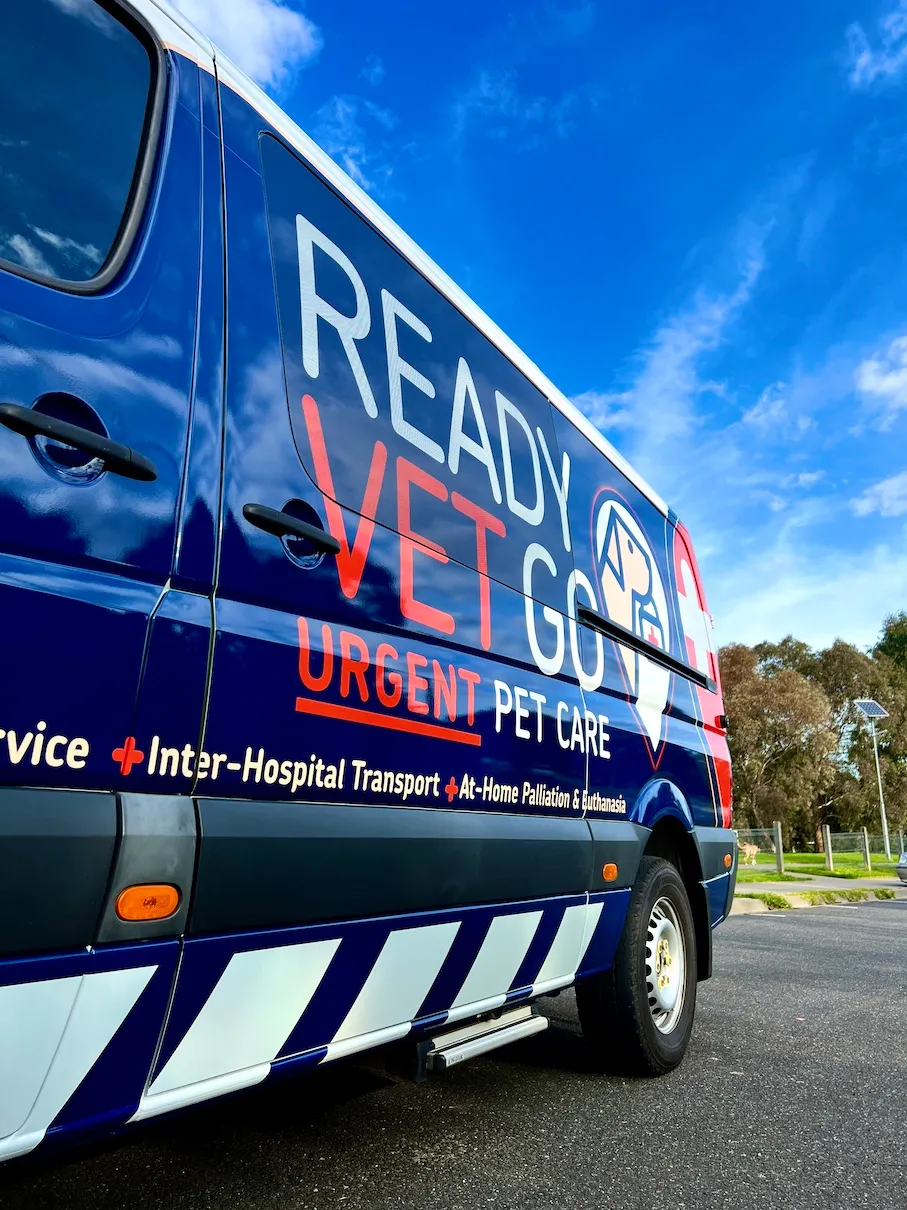
Pets in this state may need oxygen, sedation to ease stress, or urgent transfer. Ready Vet Go’s mobile vets can stabilise pets at home and, if needed, arrange safe transport in our fully equipped veterinary ambulance.
Helping Pets with Chronic Breathing Conditions
Some pets live with long-term respiratory or heart conditions that require ongoing care, such as:
- Feline asthma
- Brachycephalic airway syndrome
- Heart-related breathing problems
- Allergic bronchitis
If your pet has a known breathing condition, Ready Vet Go can assist with in-home flare-up management. We provide oxygen support, at-home treatment plans, and gentle care that avoids stressful clinic visits.
Are your pet’s signs subtle or you’re looking for a way to track their health at home? Monitoring your pet’s breathing at rest or sleep can be a life-saver, especially if they have a heart or lung condition. Under 30 breaths per minute is normal. Download & print our evidence-based Sleeping Respiratory Rate Tracker here which includes instructions on how to use this handy tool to help monitor your pet with a known heart or lung condition.
When to Call Ready Vet Go
We often overlook breathing — until it changes. When it does, it’s your pet’s way of asking for help. Whether it’s a persistent wheeze, sudden panting, or your cat breathing through its mouth, trust your instincts.
Ready Vet Go provides fast, compassionate veterinary care at your doorstep. From oxygen therapy to safe ambulance transfer, our team is ready to help Melbourne pets breathe easier and stay safe.
Why Choose Ready Vet Go
When your pet is struggling to breathe, every moment counts. What might start as mild wheezing or panting can quickly become serious without the right support.
At Ready Vet Go, we bring expert veterinary care directly to your home — delivering calm, immediate help when your pet needs it most. From on-site oxygen therapy to safe hospital transport, our mobile vets ensure your pet gets the right care without the stress of travel or waiting rooms.
Our promise to you:
- Fast response for breathing emergencies — we come to you when your pet can’t come to us
- Fully equipped veterinary ambulance with oxygen, monitoring, and critical care tools
- Compassionate, experienced vets trained in emergency and critical care
- At-home or telehealth support for triage, treatment, and recovery guidance
If your dog or cat is breathing heavily, wheezing, or showing signs of distress, don’t wait.
Call Ready Vet Go on 0421 095 838 for urgent help.
FAQs
1. Why is my dog breathing fast while resting?
Rapid breathing in dogs can mean pain, stress, fever, or lung or heart problems. If it continues for more than a few minutes, contact Ready Vet Go for an at-home vet assessment anywhere in Melbourne.
2. What should I do if my cat is breathing through its mouth?
Open-mouth breathing in cats is never normal and may signal asthma, fluid in the lungs, or an airway blockage. Call 0421 095 838 for immediate help from Ready Vet Go’s mobile vet team.
3. How can I tell if my pet’s breathing problem is an emergency?
If your pet has noisy or open-mouth breathing, blue gums, or can’t lie down comfortably, it’s an emergency. Ready Vet Go can provide oxygen support, stabilisation, and safe transport to hospital.
4. Can Ready Vet Go treat pets with chronic breathing conditions?
Yes. We support pets living with asthma, airway disease, and heart-related breathing problems through at-home care plans and oxygen therapy setups.
5. Does Ready Vet Go offer telehealth for breathing issues?
Absolutely. Our triage vets can review your pet’s breathing via telehealth, then recommend an in-home visit or ambulance transfer if urgent care is needed.

.jpg)