

Author: Dr. Paul Cunningham, DVM, MANZCVS (ECC) – Ready Vet Go Co-Founder & Chief Veterinarian
A sudden limp. A paw held off the ground. A pet that used to run to the door now hesitating at the bottom of the stairs.
If your dog or cat is moving differently, there’s a good chance something’s wrong. While a limp or lameness may resolve with rest, others point to pain, injury, or a deeper issue that needs treatment.
At Ready Vet Go, we regularly treat pets experiencing mobility problems—ranging from mild sprains to more complex joint, ligament, or nerve-related conditions. We even deal with sudden fractures or traumatic injuries that lead to severe pain & limping. Knowing when to monitor and when to call in help can make a big difference in your pet’s recovery and comfort.
Why Pets Develop Limping or Leg Pain
Dogs and cats can injure a leg in a number of ways—through play, falls, slips, or sometimes with no clear trigger at all. In dogs, we often see injuries after large bouts of exercise, like rough play at the beach or park, or chasing a ball or frisbee for hours. Larger breeds are especially prone to ligament issues in the back legs.
Cats, despite their agility, aren't immune either. Jumping off furniture, climbing fences, or landing awkwardly can lead to front or back leg strain. Even indoor cats can suffer muscle pulls or joint flare-ups.
Not all mobility issues are injury-related. Older pets may show stiffness from arthritis, while other pets develop limping from nail problems, infections, or referred pain from the spine.
Signs Your Pet May Have a Leg Injury
Changes in movement aren’t always dramatic. Some pets will limp obviously, while others show subtle signs like hesitation when climbing, or favouring one side while sitting or standing.
Here are a few behaviours to look for:
- Avoiding weight on one leg
- Slower movement, or reluctance to walk or jump
- Licking or chewing at a paw or joint
- Whimpering or growling when touched
- Swelling, heat, or sensitivity in a limb
- Hiding or reduced interest in usual activities
Cats tend to hide discomfort, so signs like limping without an obvious cause—or avoiding interaction—can still signal a problem. Similarly, a dog that appears “fine” may still be pushing through pain.
When There's No Visible Injury
It’s not uncommon for pet owners to notice their dog or cat limping, even though there’s no visible wound, swelling, or trauma. This can be confusing, but it doesn’t always mean the issue is minor.
Limping with no clear external injury might be caused by:
- Joint inflammation or arthritis
- Small ligament tears or strains
- Paw pad injuries or nail bed problems
- Infections or abscesses under the skin
- Nerve-related pain or spinal discomfort
- Non-displaced bone fractures
If your pet’s mild limp lasts longer than 24 hours, if they are showing signs of severe pain, if the limping seems to worsen, or is accompanied by other changes in behaviour, it’s worth getting checked by Ready Vet Go.
When to Call Ready Vet Go
Some limps can wait — others can’t. If your pet is in pain or refusing to walk, it’s time to call Ready Vet Go. Our compassionate mobile vets come to you, bringing hospital-grade care and calm reassurance right to your doorstep.
You should contact us if:
- Your pet won’t use a leg or yelps when moving
- There’s swelling, heat, or an obvious deformity
- The lameness follows a fall, collision, or trauma
- A limp develops suddenly in an older pet without any trauma
- Pain seems severe, or your pet growls when touched
- The limp worsens or lasts longer than a few hours
- You’re simply unsure and want expert guidance
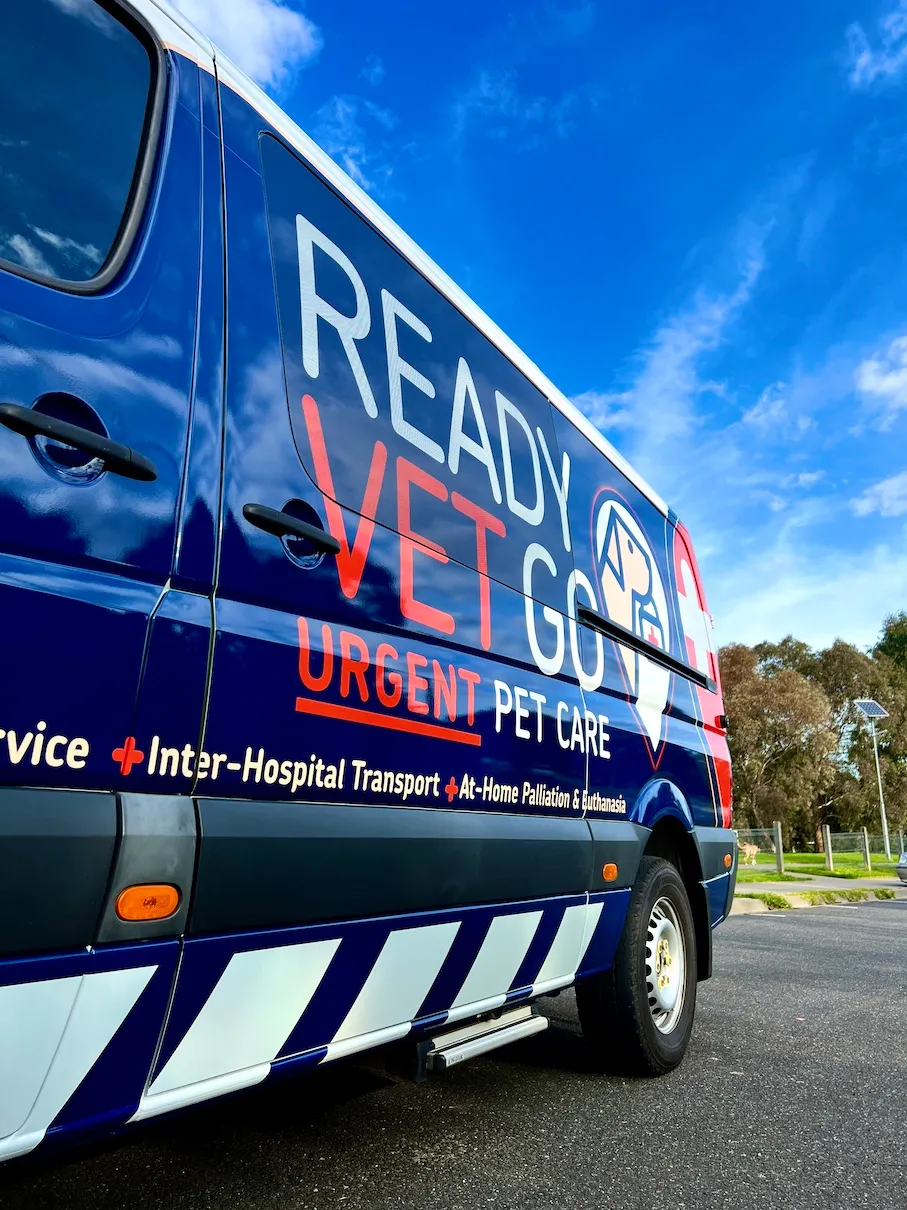
We’ll triage your pet quickly over the phone or via telehealth and send a mobile vet team to your home if needed. Our veterinary ambulance is fully equipped to stabilise your pet on-site or transport them safely to a clinic or hospital for further care.
When your pet needs help fast, Ready Vet Go is the trusted name that Melbourne pet owners rely on for thorough, gentle, and expert emergency care.
Why Choose Ready Vet Go
A limp may look minor, but it’s often your pet’s way of telling you something isn’t right. Left untreated, even small injuries can turn into lasting pain or mobility issues.
At Ready Vet Go, we bring complete veterinary care to you — from urgent at-home consultations to safe ambulance transport and telehealth support. Whether your pet needs a simple check-up, pain relief, or emergency stabilisation, we make sure they get the help they need without the stress of travel or waiting rooms.
Our promise is simple:
- Emergency response when your pet needs it most
- Human-grade veterinary ambulance with advanced medical equipment
- Compassionate care from experienced vets who come to you
- Ongoing support, from telehealth advice to follow-up treatment
If your dog or cat is limping, in pain, or just not themselves — don’t wait.
Call Ready Vet Go on 0421 095 838 for immediate help.
FAQs
1. Why is my dog suddenly limping?
Sudden limping in dogs can be caused by muscle strains, sprains, ligament tears, paw injuries, or joint pain. If your dog’s limp lasts more than 24–48 hours or worsens, book an at-home vet visit with Ready Vet Go for expert assessment and treatment.
2. Can cats get leg injuries or sprains?
Yes. Cats often injure their legs from jumping off furniture, climbing, or awkward landings. Even indoor cats can develop joint pain or arthritis. If your cat is limping or avoiding movement, our mobile vets can examine them safely at home.
3. When should I call Ready Vet Go for a limping pet?
Contact Ready Vet Go immediately if your pet refuses to use a leg, shows swelling, cries when touched, or the limp follows an accident. Our mobile vets provide compassionate emergency care and, if needed, transport your pet safely in our veterinary ambulance.
4. Can I treat my pet’s limp at home first?
You can rest your pet, limit movement, and apply a cold compress to reduce swelling — but avoid giving human medications. If there’s no improvement within a day, or pain appears severe, call Ready Vet Go on 0421 095 838 for guidance or an in-home visit.
5. Does Ready Vet Go offer telehealth vet consultations?
Yes. We offer telehealth triage for dogs and cats experiencing limping or pain. Our vets can assess symptoms online and advise whether an emergency home visit or ambulance transport is needed.
6. Does Ready Vet Go offer at-home x-rays?
While our ambulance is well-equipped, we do not house an x-ray or radiology machine & cannot perform at-home x-rays. Never fear – our strong relationships with nearby vet clinics & hospitals allows us to conveniently refer your pet for imaging after our vet’s exam & recommendation.

.jpg)